Category: exercise

  • How Yoga Can Improve Your Running

    How Yoga Can Improve Your Running

    14068403_10154481254479083_3200546205368044480_o1.jpg


    Yoga is a great complement to any runners’ regular routine. Regular running will create tightness in some areas of the body and leave other areas relatively week. Yoga can help to loosen out those tight spots and strengthen weak muscles – making you a better less injury prone runner.
    Studies have shown that yoga reduces stress, improves strength and flexibility, eases pain, helps people to stick to an exercise routine and even improves running times. Below are some of the key benefits that runners can expect to experience.

    6 Ways Yoga Benefits Runners

    1. Improves strength and efficiency – Builds strength evenly in muscles, joints and ligaments. Strengthening the core will help to improve the power you receive from each stride as your foot strikes the ground meaning that you will get more bang for your buck. Who doesn’t want that!
    2. Helps prevent injuries – Helps prevent injury by increasing flexibility and strength as well as awareness of the body. Yoga helps you to find the balance between strength and flexibility and have happy muscles with a good range of movement. Increased body awareness will mean that you are less likely to push your body beyond its limits and risk injury.
    3. Enhances breathing – Breathing exercises will help you to optimise each breath and potentially increase lung capacity. Becoming conscious of your breath can have a profound impact not just on your running but your life in general.
    4. Mental strength – Cultivate improved focus and awareness through mindful movement and meditation. Allowing you to run with a greater sense of self belief and push through mental barriers while still being able to discern when you need to pull back.
    5. Loosens tight muscles and facia – Simple movement and supported held stretches help to rehydrate and release restricted muscles and facia. Increased flexibility can help to relieve nagging aches and pains.
    6. Improves energy – Helps to reduces stress and improves sleep allowing the body to get better quality rest. And really everyone needs a little less stress and better quality sleep.


  • An inversion a day keeps the doctor away

    An inversion a day keeps the doctor away

    wpid-img_20141220_185835-1.jpg

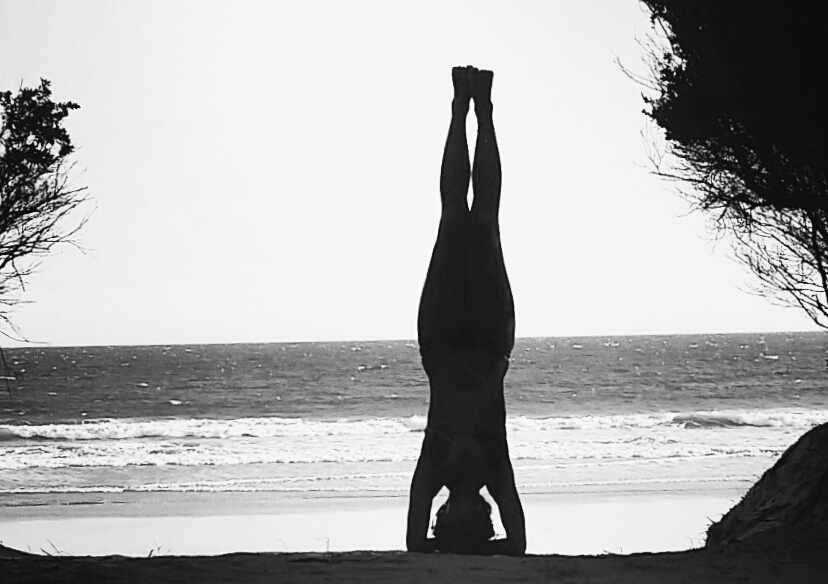
    I’m a really big fan of inversions in all their forms.  Generally speaking an inversion is any pose where your head is below your heart. So while headstands and handstand are probably the first things that come to mind you’re also in an inversion in downward facing dog, standing forward folds and even legs up the wall.

    While I love all inversions I’d like to speak more specifically about headstand using props. Now before I ramble on about all the amazing benefits its important to note that headstands are not for everyone, people with neck injuries, epilepsy, high blood pressure, heart conditions, acid reflux  and eye problems should seek medical advise before getting upside down. Also women on their monthly cycle may also want to avoid headstand (think gravity and flow …enough said).

    Traditional headstand can be a little scary for students and teachers alike. If you don’t get the correct alignment you put your neck at great risk of injury and if you don’t yet have the strength simply lifting your legs up can feel like mission impossible.

    So how do you do a headstand without putting your neck at risk and use a little momentum to take yourself up? You don’t need any fancy yoga props you just need to chairs and a wall. To be kind to your traps use padded chairs or put down cushions and/or blankets to give yourself a little padding and if you’re crazy like me and kind of enjoy a little pain you can skip the padding idea, you’ll be working deeper into releasing your traps. If your chairs feel like they may slip place a yoga mat under the feet of your chairs.wpid-collage_20150122171617410.jpg  Bring the chairs snug up against the wall facing each other (see picture to the right). Fold forward and bring your head into the gap between the chairs and against the wall, you want the tops of your shoulders to be resting evenly on each chair. For me having the chairs about 25 centimetres apart works well but you’ll need to have a bit of a play around to see what works best; you want to feel comfortable and stable. When you’re ready walk your legs in towards the wall, have your hands planted on each chair finger tips facing the wall then press into your hands for leverage and either lift yourself up slowly using core strength or kick your legs up(see video below). From here if you’re feeling steady you can experiment with different arm positions to work on releasing tension in your traps. When you’re ready to come back down press your hands firmly into the chairs and slowly lower yourself back down then come to rest in childs pose while you let the blood run back away from your head.

    The true benefits of headstand are said to be experienced after around 3 minutes of inverting, 3 minutes can feel huge is you’re not used to going upside down, so I recommend start off small maybe just 30 seconds and then working your way up. I personally practice this type of headstand supported by chairs for about 5 minutes and for me it’s magic. Speaking of benefits here are some of the many benefits of having a regular headstand practice.

    • This style of headstand helps to stimulate the parasympathetic nervous system, which produces feelings of relaxation and calmness.  Your parasympathetic nervous system is a brilliantly peaceful place to be.
    • Forget expensive spa treatments reversing gravity flushes fresh nutrients and oxygen to the face and stimulates the facial capillaries giving you a beautiful healthy glow.
    • Not quite so regular…when you first think about it may not make sense that turning upside down would actually help you go but keep reading.   When you invert your body you allow the stool that is moving through the ascending colon to move with the force of gravity. The pressing of the stool against the intestinal walls also encourages movement and the pressure on the walls of the digestive tract stimulates a stronger peristalsis (muscle contractions that occur in your digestive tract).
    • Hit a wall can’t concentrate or focus? When the brain lacks a sufficient blood supply, the body becomes slow and sluggish because the brain uses 25 percent of the body’s oxygen. Increasing blood flow nourishes brain cells with more oxygen resulting in improved concentration, memory and awareness.
    • Felling a little down…turn the frown upside down! When you go upside down the adrenal glands are flushed and detoxified, this stimulates the release of neurotransmitters and endorphins that allow you to immediately feel uplifted and can counteract depression and mood swings.
    • No one really likes getting sick! Headstands help increase immunity and prevent illness.  Your lymphatic system has a key role to play in keeping you well. As lymph moves through the body it picks up toxins and bacteria to be eliminated by the lymph nodes. Lymph moves as a result of muscular contractions but is also affected by gravity. So when you go upside down you’re sending your lymph to your respiratory organs, where germs often get into the body. When you return to an upright position, gravity drains the lymph away again, sending it through your lymph nodes for cleansing.


    So go have fun get upside down and enjoy the new perspective but also never forget to always be listening to your body, not all days will be the same. Honour where you’re at and what your body needs.

    Love Blessings and Kindness

    xxx


  • Meditation – Mental Exercise

    Meditation – Mental Exercise

    069a016c26f854d01efc374bb321700d

    Just like lifting weights makes your muscles stronger, practising meditation grows your ability to cultivate peace in your mind.

    How many times have you heard someone say, I’m feeling so unfit, I really need to do some exercise? Majority of people readily identify with the connection between good physical health and physical exercise.

    Now how many times have you heard someone say, I’m feeling so emotionally unsettled, I really need to meditate … any takers? Not so common.

    Why is this so? I think it stems back to the fact that we teach Physical Education in our schools but not Mental Education.  A lot of people,  have heard of meditation but not experienced it. It’s a foreign concept for many but once you start (just like regular physical exercise), regular mental exercise will have you in your best mental state.

    In a world that is becoming so over stimulated by technology, it is more important than ever to slow down and take some time to sit with yourself and just be.

    There are so many benefits to meditation some of which include, but are not limited to increased immunity, boosted memory, emotional balance, reduction in stress, improvement in sleep, increased compassion, lowering of blood pressure and enhancement of the way you experience your life.

    So how do you start? How do you easily get your regular dose of mental exercise? I recommend either starting with a guided meditation app so that you can slowly build up mastering your mind, or going to a guided mediation class.

    If you’re looking for an app, here’s the top three apps that I’ve tired

    Calm

    This is probably my favourite app. You choose your preferred background image and sound, selecting from options such as a beach with the sound of rolling waves or a forest with the sound of rustling trees, and then you can choose to listen to their seven steps to clam, which is a great guide for beginners. You can also choose to do a guided body scan meditation or timed meditation. For those who are strapped for time, you can select bite sized meditations that last for two to five minutes, which are ideal if you just need a mid-afternoon tune in and if you feel as though you want to get more connected with yourself, there are 60 minute sessions available. The best part about this app is that it’s completely free


    1 Giant Mind 

    Completely free again, 1 Giant Mind teaches you to meditate in three different levels. Meditations can last anywhere from 10 to30 minutes depending on how much meditation goodness you feel like you need. Whenever you begin a meditation, you will be asked how you are feeling (both emotionally and your actual feelings towards meditation) and then after the meditation, you will be asked how you are feeling and given a space to comment on the meditation. This will form an online meditation journal, where you can track your progress.


    Headspace 

    Headspace is the creation of the amazing Andy Puddicombe (if you haven’t watched his TED talk on mindfulness, do yourself a favour).Not only do you get a good variety of content to listen to, but the app is filled with fun features including being able to follow friends and receiving awards for meditating for a certain number of days in a row. When you first download the app, you get 10 free 10 minute sessions, along with some animations that introduce you to the basics of meditation. Once you’ve completed your 10 sessions, you can subscribe for unlimited access to guided meditations and mindfulness talks. Subscriptions cost $12.95 per month with no lock in or $7.99 per month with a one year sign up. For every subscription paid, Headspace will donate a subscription to someone in need

    Like any form of exercise regular practice is the key to experiencing real benefits.

    270b23ecdaf1c53cdf93eacb5aee44d5